On this page
The short answer
First-time sexual intercourse does not have to be painful. While mild pressure or slight stretching sensations are normal, sharp, stabbing pain and heavy bleeding are anatomical red flags caused primarily by involuntary pelvic floor muscle guarding and lack of lubrication. The hymen (vaginal corona) is not an airtight seal that 'breaks', but an elastic fringe of tissue that stretches easily under parasympathetic arousal. Take your time, use generous water-based lubricant, communicate continuously, and stop immediately if anything stings or hurts.
For generations, first-time sex has been saddled with dramatic cultural folklore: the inevitable gasp of pain, the ritual tearing of the “cherry”, and the expected splash of blood on the sheets. Popular media often depicts this discomfort as a mandatory toll one must pay to cross the threshold into adulthood.
From a clinical and anatomical standpoint, this narrative is fundamentally flawed.
While it is entirely normal to feel unfamiliar pressure, mild stretching, or performance anxiety during your initial sexual experiences, severe pain and heavy bleeding are not biological requirements of sex. When pain occurs, it is almost always an understandable physiological reaction to anxiety, involuntary muscle guarding, or rushed foreplay.
Here is the straightforward clinical truth about first-time intimacy, your pelvic anatomy, and how to make your initial encounters comfortable and pleasurable.
Bedroom Myth-Busting: "You Must Bleed the First Time"
Myth: Every virgin bleeds during their first penetrative encounter because a sealed wall of tissue must be violently torn.
Reality: Extensive studies published in the *Journal of Sexual Medicine* demonstrate that over 50% of women and vulva owners experience zero bleeding during their first sexual intercourse. The hymen—more accurately termed the vaginal corona by medical associations worldwide—is an elastic, mucosal fringe lining the vaginal opening, featuring an existing central opening that permits the flow of menstrual fluid. When adequately lubricated and aroused, this tissue simply stretches like a flexible scrunchie without tearing. Bleeding usually indicates micro-lacerations caused by unlubricated friction, not an anatomical rite of passage.
The Myth of the “Cherry”: Anatomy of the Vaginal Corona
To understand why pain happens, we have to start by dismantling the single biggest misconception in sexual health: the myth of the intact, drum-skin hymen.
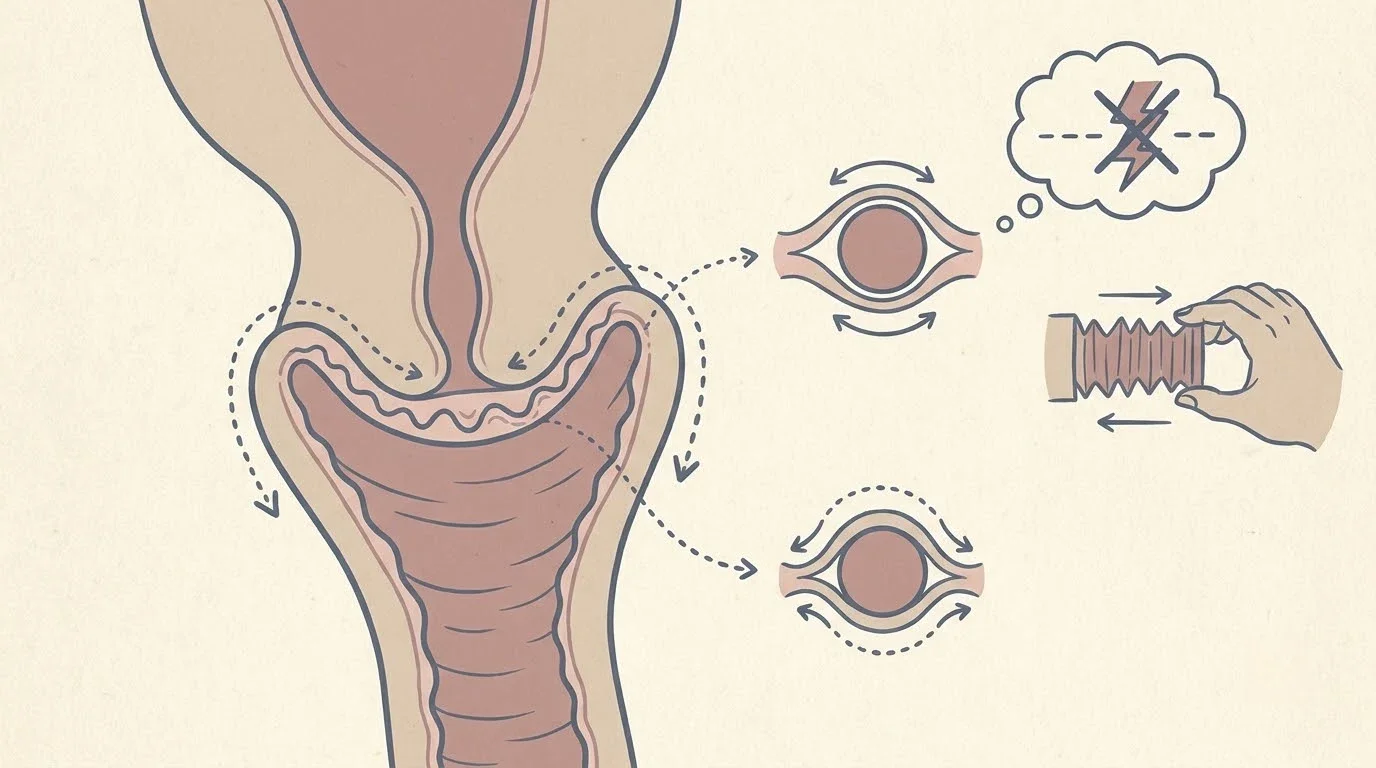 Figure 1: The vaginal corona is not a sealed barrier; it is a flexible, mucosal collar that expands naturally under gentle stimulation.
Throughout childhood and adolescence, this tissue naturally undergoes gradual micro-stretches from everyday activities: cycling, horseback riding, gymnastics, swimming, masturbation, and standard tampon use. By the time most people consider partnered intimacy, the corona is already pliable.
When friction occurs without sufficient lubrication, or when penetration is forced while the body is tense, small micro-tears in the vaginal mucosa can occur. This is not the “breaking of a virginity seal”; it is simply skin abrasion caused by dry friction.
The Invisible Brake: Why Fear Locks the Door
The human brain is the primary sexual organ. When you feel safe, relaxed, and excited, your body activates the parasympathetic nervous system (the “rest, digest, and arouse” pathway). Blood flows to your erectile tissues, natural lubrication coats the vaginal walls, and your pelvic floor muscles soften.
However, if you enter a sexual encounter believing that sex is supposed to hurt, your brain interprets the upcoming act as an imminent threat.
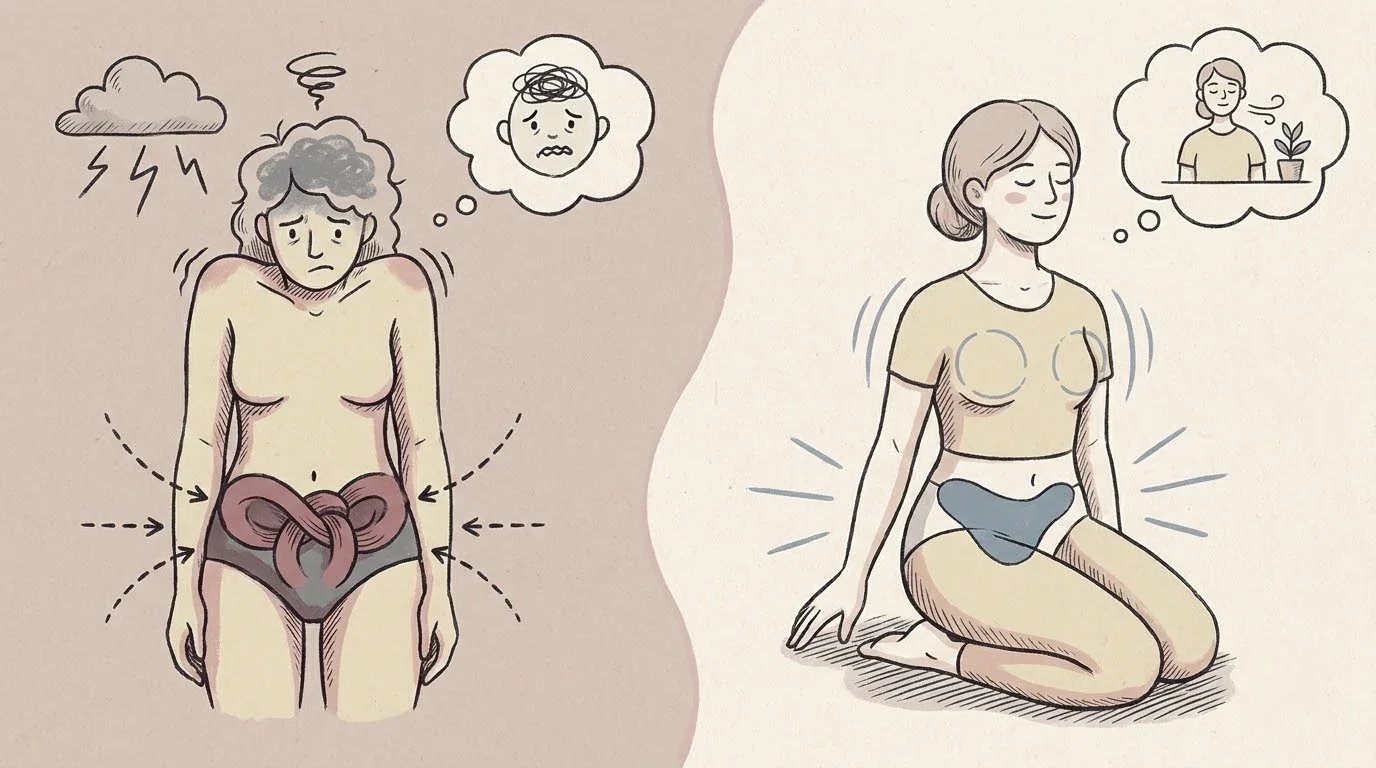 Figure 2: The tension-pain cycle: fear triggers sympathetic muscle guarding, while mindful breathing and patient touch soften the pelvic floor.
This triggers the sympathetic nervous system (the “fight-or-flight” response):
- Adrenaline Spikes: Your heart races and your natural lubrication pathways immediately shut down.
- Involuntary Muscle Guarding: The pubococcygeus and levator ani muscles that wrap around the lower third of the vaginal opening clamp down in a protective spasm, attempting to block entry.
- The Uncomfortable Barrier: Attempting penetration against clenched, dry muscle creates a painful barrier.
Think of it like trying to walk through an automatic sensor door at a supermarket before the sensor has detected you. If you walk into the glass while it is closed, it hurts. But if you stand patient and let the sensors recognise your presence, the door slides open effortlessly.
The Magic of Tenting: How Arousal Changes the Canal
In a non-aroused resting state, the vaginal walls rest collapsed together, much like an empty balloon, with an average length of roughly 7 to 8 centimetres.
During prolonged, delicious foreplay—such as gentle kissing, clitoral massage, and whole-body caressing—a remarkable anatomical process called vaginal tenting occurs:
- The upper two-thirds of the vaginal canal expands outward, ballooning in diameter.
- The cervix elevates upward into the abdominal cavity, effectively lengthening the vaginal canal to 11 to 14 centimetres.
- Transudate (natural fluid) seeps through the vascular walls, creating a slick hydraulic cushion.
If penetration is attempted before tenting has occurred, the penis or toy encounters the un-lengthened back wall and tense lower muscles. Foreplay is not optional bonus content; it is biological preparation.
The First-Time Comfort Playbook
If you or your partner are preparing for a first penetrative experience, follow these clinical comfort guidelines:
- Invest in a High-Grade Water-Based Lubricant: Never rely solely on natural lubrication. Anxiety can cause natural fluid to dry up in seconds. Keep a bottle of pH-balanced, glycerin-free water-based lube at the bedside and apply a generous pool to both partners.
- Prioritise Clitoral Stimulation First: Between 70% and 80% of vulva owners require direct clitoral stimulation to reach high arousal. Spending 15 to 20 minutes focusing on kissing and clitoral touch guarantees that the pelvic floor is primed and relaxed before any penetration is attempted.
- Control the Depth Yourself: If you are the receptive partner, take control of the angle. Being on top (the cowgirl position) allows you to control the exact speed, angle, and depth of entry millimetre by millimetre.
- Use Diaphragmatic “Belly Breathing”: When we are nervous, we hold our breath in our chest. Take slow, deep inhalations into your lower belly. As your diaphragm expands downward, your pelvic floor relaxes and opens naturally.
🔥 Tap to Reveal Pro-Tips & Comfort Hacks
Pro-Tip 1: The "Fingertip-Before-Shaft" Pacing Rule
Before introducing a penis or full-size toy, have a well-lubricated fingertip gently circle the external entrance. Slowly introducing one finger allows your internal sphincter and pelvic muscles to get accustomed to the sensation of fullness without intimidation.
Pro-Tip 2: The Warm Bath Pre-Warm
Taking a warm bath together 30 minutes before your encounter naturally increases peripheral blood flow and melts away baseline physical muscle tension in the lower back and hips.
Pro-Tip 3: The Pelvic Tilt Pillow
If lying on your back, place a folded pillow beneath your lower back and hips. This angles the pelvis so that penetration aligns naturally with the gentle upward curve of the vaginal barrel.
When Pain Is More Than Nerves: Vaginismus & Medical Issues
In most cases, first-time discomfort resolves quickly with patience, lubrication, and trust. However, persistent or intense pain should never be ignored or forced through.
 Figure 3: Open, non-judgemental communication between partners ensures that physical comfort always takes priority.
Consult a GP, gynaecologist, or sexual health clinic if you experience:
- Vaginismus: An involuntary, involuntary spasm of the pelvic floor muscles that makes any penetration (including tampons) feel like hitting a solid brick wall. Vaginismus is a highly treatable physical condition that responds remarkably well to pelvic floor physical therapy and graduated dilators.
- Vulvodynia or Vestibulodynia: Chronic nerve sensitivity or burning sensations at the entrance of the vulva, even with light touch.
- Underlying Infections: Active thrush (yeast infection), bacterial vaginosis (BV), or sexually transmitted infections can inflame mucosal tissue, causing intense stinging upon contact.
The Golden Rule: You Can Stop at Any Second
Consent is not a binding legal contract signed at the start of an evening; it is an ongoing, enthusiastic conversation that can be paused or withdrawn at any moment.
If at any point during your encounter something hurts, feels uncomfortable, or simply doesn’t feel right:
- Say “Pause” or “Stop”: You do not need to give a lengthy justification. A supportive, mature partner will pause instantly without guilt or pressure.
- Switch to Non-Penetrative Pleasure: Great sex encompasses a vast universe beyond penetrative intercourse: oral sex, mutual masturbation, sensual massage, and cuddling are equally valid, deeply intimate forms of lovemaking.
Frequently Asked Questions
Is it normal to feel a slight pinch or pressure?
Yes. Feeling an unfamiliar sense of fullness, slight stretching, or mild pressure as muscles adapt is common. However, sharp, burning, or unbearable pain is your body’s signal to stop immediately and add more lubricant.
What should I do if bleeding occurs?
A few light pink streaks or spots on a tissue can happen from minor micro-stretching of mucosal tissue. If spotting occurs, rinse gently with warm water, avoid douching, and give your tissue a few days of rest. If bleeding is heavy (resembling a menstrual flow) or persists beyond 24 hours, consult a healthcare provider.
How can partners help reduce first-time anxiety?
Partners can take all pressure off intercourse by explicitly establishing beforehand that penetration is not the required goal of the session. Focusing on full-body intimacy and listening attentively to physical comfort cues builds lasting sexual confidence.
Quick check
What is the primary anatomical cause of severe discomfort during first-time intercourse?
Involuntary pelvic floor muscle tension and insufficient lubrication caused by fear or anxiety
Spot on! When you feel nervous, your sympathetic nervous system triggers involuntary muscle guarding, making the vaginal opening tense and resistant. Relaxation, foreplay, and lubricant eliminate this friction.
A thick, sealed membrane (the hymen) that must be forcibly ruptured
A persistent anatomical myth! The vaginal corona is a flexible, stretchy collar of mucosal tissue that naturally stretches rather than breaking when properly aroused.