On this page
The short answer
Choose a dedicated physical remote for effortless, zero-distraction in-room play where tactile buttons let you change intensities without glancing at a glowing screen. Choose smartphone app control if you navigate long-distance relationships where partner control over the internet is essential, or if you want custom vibration playlist programming.
Side by side
| Detail | Physical Wireless Remote | Smartphone App Control |
|---|---|---|
| Operational range | 3 to 10 metres (direct RF or low-energy Bluetooth) | Infinite via internet (Wi-Fi/4G/5G) or 10m local Bluetooth |
| Tactile interface | Raised physical silicone buttons clicked by muscle memory | Flat glass touchscreen requiring visual attention |
| Connection setup | Instant pair upon turning both hardware units on | Requires Bluetooth pairing, app launch, and account sync |
| Screen distraction | Zero light emission; keeps the bedroom atmosphere dark | Bright smartphone display and potential notification alerts |
| Digital privacy | Completely offline; zero data collection or tracking | Requires app permissions; server logs data in cloud accounts |
Wireless control has transformed partnered sexual wellness. Instead of reaching awkwardly between bodies to press tiny buttons on the toy’s casing, wireless technology shifts intensity control into the partner’s palm.
Today, manufacturers deliver this control through two distinct formats: a dedicated handheld physical remote (often included in the box with models like the We-Vibe Sync 2) or a smartphone application connecting over Bluetooth and Wi-Fi. While apps offer high-tech customisation, physical remotes hold distinct tactile and privacy advantages.
The bedroom atmosphere and tactile muscle memory
The greatest practical difference during an intimate session is how the interface feels under your fingers:
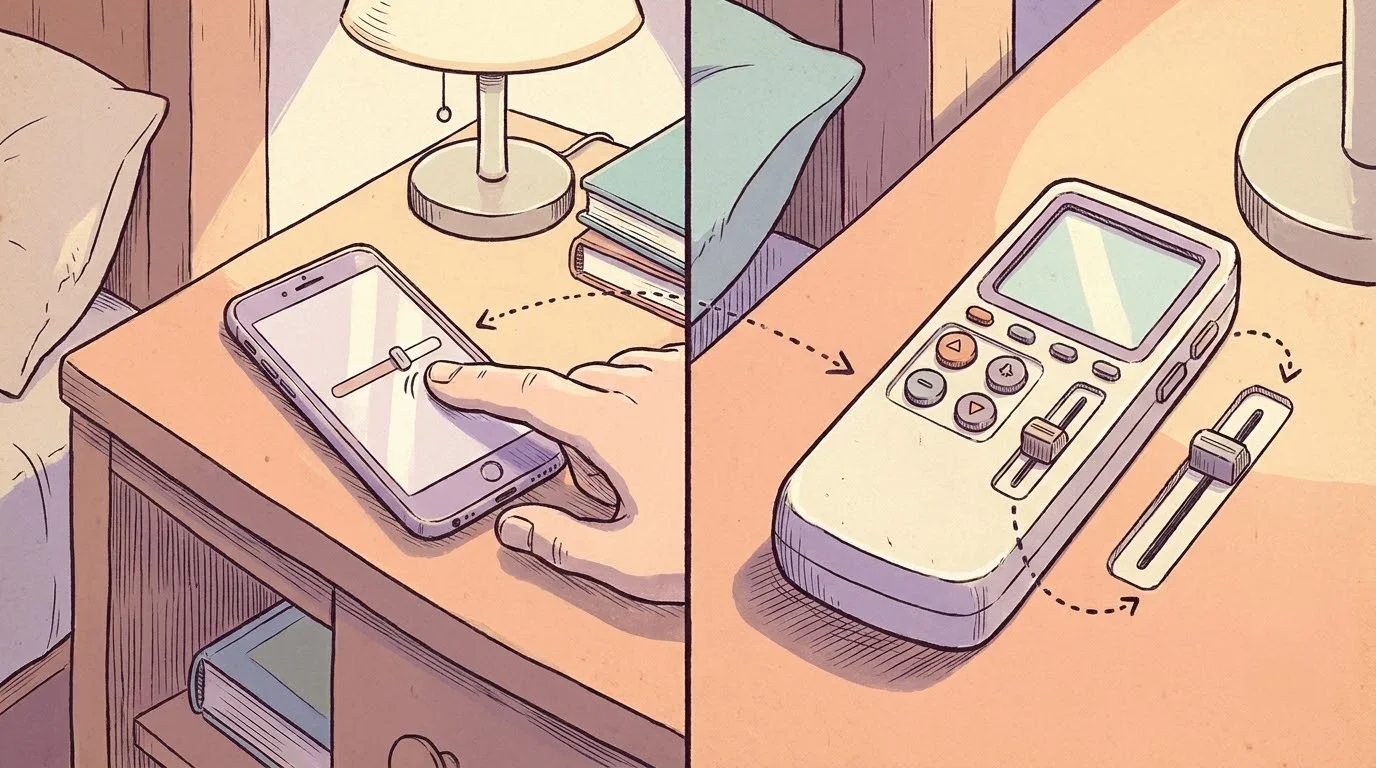
A dedicated physical remote features raised silicone buttons. You can hold it under the duvet, slip it into a palm, and press buttons purely by touch. When you want to step up the vibration intensity or pulse pattern, your thumb presses the tactile switch with a satisfying click. You never need to look down, pause the mood, or take your eyes off your partner.
Smartphone app control relies on a smooth glass touchscreen. Operating a slider or touch curve requires looking directly at the phone display. In a dim bedroom, a smartphone screen casts harsh blue light, breaking sensory immersion. Furthermore, picking up a mobile phone invites notification interruptions: an incoming work email, message preview, or calendar reminder can instantly puncture arousal.
Long-distance relationships and infinite range
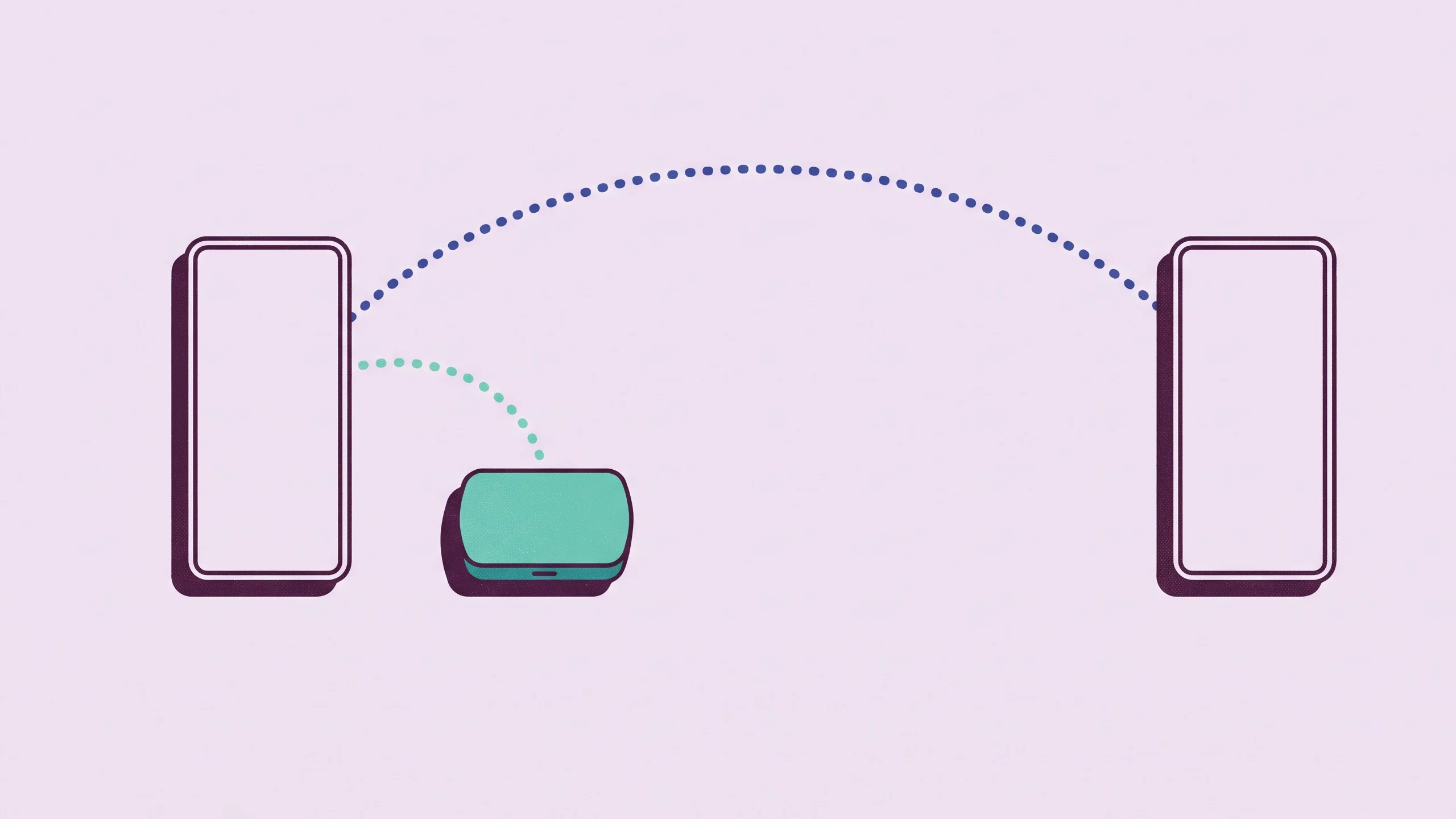
Where smartphone apps excel without competition is long-distance intimacy. If you and your partner live in different cities or travel frequently for work, a physical remote is useless because radio frequency signals cannot travel past a few metres.
App-connected toys route commands through cloud servers. Your partner can open the app in London, connect to your shared session, and control the vibration speed and pattern of a device worn in Manchester or Tokyo in near real-time. Apps also allow syncing vibrations to music playlists, ambient audio, or video chat streams, bridging physical distance in ways hardware remotes cannot duplicate.
Connection stability, pairing friction, and battery drain
Reliability often separates an enjoyable session from technical frustration:
- Pairing latency: A physical remote links with its companion toy via a factory-paired RF or Bluetooth frequency within two seconds of powering on. Smartphone apps require turning on mobile Bluetooth, opening the app, waiting for the peripheral scan, and occasionally re-authenticating user credentials.
- Signal drops through water and tissue: 2.4 GHz Bluetooth signals struggle to penetrate human body tissue and water. If a partner holds an app-controlled toy between their thighs or under bathwater, the phone may disconnect and require a manual reconnect. Physical remotes typically broadcast at higher transmitter strength designed specifically for line-of-sight bedroom distances.
- Battery lifecycle: Physical remotes use tiny coin cells (CR2032) or micro lithium cells that last months or years of intermittent play. Smartphone apps drain phone battery while running active background Bluetooth LE scanning.
Data privacy and cybersecurity
Privacy is an unavoidable concern with internet-connected intimacy products. Consumer advocacy organisations such as Which? and the Mozilla Foundation have repeatedly highlighted vulnerabilities in companion sex toy apps.
An app-connected device requires creating an account, granting location and Bluetooth permissions to your phone, and sending usage telematics over cloud servers. Even with encrypted data channels, server breaches or company policy shifts can expose sensitive behavioral records.
A dedicated physical remote communicates entirely offline over a closed local frequency. It requires no email address, tracks no usage logs, and cannot be intercepted over the internet.
Summary guide
Choose a physical wireless remote if:
- You and your partner share the same bed or room during intimacy.
- You want an intuitive tactile remote you can operate blind under blankets.
- You value complete digital privacy with zero app downloads or accounts.
Choose smartphone app control if:
- You are in a long-distance relationship and need remote control across different locations.
- You enjoy deep customisation, such as creating rhythmic vibration loops or syncing to audio beats.
- You are comfortable managing phone permissions and keeping apps updated.
Quick check
Why do many couples prefer a physical wireless remote over a smartphone app during spontaneous in-room bedroom play?
Physical remotes offer raised tactile buttons that can be operated by touch alone without opening phone locks or apps
Tactile buttons allow you to change speeds under bedsheets without screen glare, passcode delays, or looking away from your partner.
Smartphone Bluetooth cannot function when two people are in the same room
Bluetooth works across several metres in a bedroom; the preference is purely about tactile flow, screen distraction, and immediate response.